The 5 Stages of Financial Freedom: Which One Are You In?

Ever feel like you're running on a financial treadmill? Working hard, but not sure if you're actually getting anywhere?
Here's the truth: the road to financial freedom has clear, recognizable stages — and most people are stuck at stage 1 or 2 without even knowing it.
Let me show you the 5 stages of financial freedom, where you are right now — and exactly what it takes to move up.
Different Approaches for Different People
Every author has their own approach, their own percentages, and their own names for individual steps. Honestly — it doesn't matter which specific model you choose, because most of them are built on very similar foundational ideas.
What matters is:
- understanding one approach
- and sticking with it long-term
Everything is rooted in the psychological feeling of well-being, security, and control over your own life.
The Psychological Framework
As a simple example, we can use Maslow's Hierarchy of Needs. It's one of the most well-known models for visualizing human needs at any given moment and their natural progression.
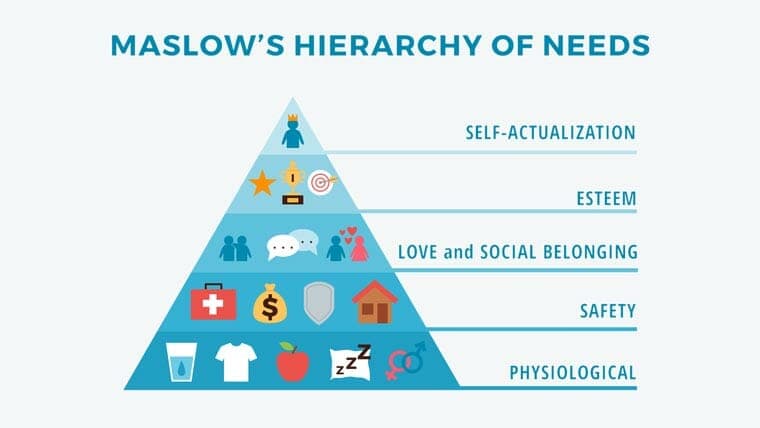
Maslow's pyramid is a psychology model showing that human needs stack like building blocks — you can't focus on "higher" needs (like self-fulfillment) until the basics (food, shelter, safety) are covered. The same logic applies to your finances.
Yes — it's a simplified model of a very complex topic that psychologists and philosophers have studied for hundreds of years. But for our purposes — understanding the basic steps to financial freedom — it's more than enough.
1) Physiological Needs — Surviving Month to Month
Financially, you can understand this level very simply:
I earn more than I need for basic living.
This doesn't just mean not spending more than you earn. It means your monthly income actually exceeds your cost of living.
If you don't know what your cost of living is, here's a guide: How to Start a Budget
This is often the hardest step of all. It might mean:
- changing jobs or careers
- relocating
- making significant lifestyle changes
If you're past this point, you've done the hardest part. Really. Great job.
2) Safety and Security Needs — The Emergency Fund
You can cover your expenses every month and you have an overview of where your money goes. Excellent.
Now comes the key question:
What if something goes wrong?
- you lose your job
- your car breaks down
- you're self-employed and get sick for two months
This isn't pessimism — it's realistic preparation. As they say:
It's better to be prepared and not need it than to need it and not be prepared.
When trouble hits and you don't have reserves, who shows up first? Exactly — the bank on a white horse. And in a crisis, people often sign unfavorable loans just to quickly solve the situation.
The goal of this phase is to have an emergency fund that allows you to:
- handle an income gap
- pay for repairs
- live more calmly without constant "what ifs"
How to Do It?
- Calculate your cost of living
- Add necessary extra expenses:
- housing (repairs, appliances)
- car (maintenance, alternative transportation)
- Prepare for a reasonable bad scenario — not the apocalypse
Example — John Smith
- income: $4,000/month
- cost of living: $2,500/month
- owns home (mortgage)
- needs a car
- job search time: approximately 6 months
To cover basic expenses for 6 months, he needs $6,000 from savings. Add a reserve for car and home repairs, let's say $9,000 total.
At this phase, John isn't thinking about investing. He's thinking about peace of mind.
3) Social Needs — Life Under Control
Now comes the "normal life" phase:
- car
- housing
- vacations
This is also the trickiest phase. It's very easy to end up living beyond your means.
It starts innocently:
"I can definitely repay this loan..."
And often it doesn't stop at one.
On the other hand, it's a great time for:
- career development
- education
- starting a business
The goal is simple:
Increase your value, but keep expenses in check.
Practical rule:
- live on 60-70% of your income
4) Esteem Needs — Pay Yourself First
This phase isn't about recognition from others, but about recognizing yourself.
You have your finances under control, income is stable, and you're thinking about where to systematically put your surplus. Investing becomes a priority because you understand you're buying freedom, and through it, time.
Here the "pay yourself first" principle applies (Rich Dad, Poor Dad):
- after payday, a planned portion goes aside
- you live on the rest
In other words, you have self-respect and you're building your future.
5) Self-Actualization — Financial Freedom
This is the goal, the motivation, the horizon.
The moment money stops being a necessity, you gain choice:
- work only on things that matter
- retire early
- dedicate time to family, projects, yourself
Everyone defines this phase differently — and that's exactly right.
Conclusion
Basic human needs can be mapped very well to financial steps. Their great advantage is that they're tangible and achievable.
Most people can get to phase 4 within a single year — and then function in it long-term and contentedly. Are you in?
Read all the way to here? Let me know which phase you're in and how you liked the article.
Reach out at dennis.vymer@myfinancialfreedomtracker.com.
Stay Updated
Get notified about new articles and MFFT build-in-public updates.
Ready to Apply This?
Start tracking your finances today and put these tips into practice.
- Import bank statements in seconds
- AI-powered categorization
- Beautiful visualizations
- Set and track financial goals
Related posts
 Start Here
How Long Will Your Savings Last in Retirement? (Table)
At 4% a year and a 3% real return, savings last about 44 years; at 6%, about 22. Two bad years at the start can cut a 37.4-year plan to 21.5.
 Start Here
One More Year Syndrome Starts the First Time You Raise Your FIRE Number
Our daughter is the first thing in five years I'd accept as a reason to change our FIRE number. One more year syndrome doesn't wait for the finish line: it starts the first time a good market year talks you into a bigger target. Market moves the date. Life moves the number.
 Start Here
Retire Early Abroad: Why the Cheap-Country Discount Shrinks
Moving somewhere cheaper does cut your FIRE number, by less than advertised and not for good. A view from Czechia, one of the countries on those lists.
 Start Here
Lean FIRE vs Fat FIRE: Price Your Spending Floor First
Top pages can't agree if fat FIRE starts at $100,000 or $200,000 a year. The tier is an output: price your spending floor first, then see which FIRE fits.
 Start Here
I Want Free Wednesdays at 40. I Can Buy One This Friday.
I'm saving for free Wednesdays twelve years out and had never once asked what one costs today. So I ran it: on my own model a four-day week at 80% pay delays financial independence by 21 to 49 months. And if your spending falls with your income, by exactly nothing.