YNAB vs Monarch vs Rocket Money vs Mint 2026 (Tested)


Spreadsheets were driving me crazy.
And I've tried... maybe fifteen apps? Probably more.
Mint (RIP), YNAB, Monarch Money, Empower, Copilot... Some were pretty. Some had great charts. But none of them answered the most important question:
When can I stop working?
Most apps solve "where is my money going?" And that's fine—for beginners.
But if you're chasing financial independence, or just want to see the light at the end of the tunnel... you need more than pretty pie charts.
Jump to a head-to-head: YNAB vs Monarch · Monarch vs Rocket Money · Rocket Money vs YNAB
More from this series: Empower vs Monarch Money · YNAB alternatives that are actually free · net worth trackers that don't link to your bank
If you're new to personal finance
If you're just getting started and want to understand the basics first:
- Budgeting from Zero — a basic system that takes 10 minutes a month
- What is FIRE — your path to financial independence
How I tested these apps (and a disclosure)
Before any table: My Financial Freedom Tracker (MFFT) is my own product. I built it, I run it, and I want you to use it. This is not a neutral third-party review, so I hold the comparison to rules that keep me honest:
- Only shipped features count. If something is on my roadmap but not live, it does not earn a checkmark — it goes in a clearly labeled roadmap note instead.
- MFFT loses rows where it loses. Bank sync, mobile apps, and couple features are real gaps, and the tables below say so.
- Competitor claims are sourced. Every price and headline feature was re-verified on June 12, 2026 against each vendor's official pricing or help pages: YNAB pricing, Monarch pricing, Rocket Money's pricing help page (its premium page confirms only the sliding-scale mechanism — the $7-14 dollar range comes from The Penny Hoarder's 2026 review), and NerdWallet's review of Empower's advisory fees.
What "tested" means here: I used each app hands-on with my own real transactions — YNAB and Monarch during their free trials, Empower and Rocket Money on their free tiers — going through the same monthly routine in each: get transactions in, categorize a month of spending, and try to answer "what's my net worth and when could I stop working?"
The criteria: price, how transactions get in (automatic sync vs. file import), categorization quality, couples support, net worth depth, FIRE/projection tooling, subscription management, and mobile apps.
What do you actually need from an app?
It depends on where you are on your journey.
Level 1: Living paycheck to paycheck
You need to know where the money goes. Nothing more, nothing less.
Most apps do this well. Download transactions, sort into categories, see reality.
Pick whatever's free and capable - no point spending money on apps when you're trying to save it...
Level 2: I have extra money but don't know what to do with it
You need a budget and goals. The app should tell you if you're heading in the right direction.
This is where most apps start falling short.
Level 3: I want financial independence
You need to know:
- What's my total net worth?
- How fast am I growing?
- When will I reach my FIRE number?
And this is where almost every app completely fails.
What's on the market in 2026
Here's the field, app by app — and then the head-to-head verdicts.
The premium pair — and the tool I built
The two leading premium budgeting apps have clustered around remarkably similar pricing—roughly $100-110/year. Their philosophies differ dramatically.
YNAB (You Need A Budget) — $109/year or $14.99/month. The gold standard for zero-based budgeting. Every dollar gets a job before you spend it. Legendary methodology, huge community, 34-day free trial, and YNAB Together shares one subscription with up to 6 people.
Monarch Money — $99.99/year for Core, $14.99 month-to-month; a $199/year Plus tier launched in 2026. Founded in 2018 by Mint's first product manager, Val Agostino, and the app most ex-Mint users landed on after Intuit shut Mint down. Excellent shared views for couples — the Wall Street Journal's pick for best budgeting app and Motley Fool's pick for couples and families.
My Financial Freedom Tracker — €4.99 a month, €49.90 a year, or €299 once for lifetime access: a small subscription that keeps your data private and never sold. Signed up before paid plans launched? You're a founding member, and your first year is on us. Built specifically for the FIRE journey: expense tracking plus net worth, FIRE planning, and wealth projections. Manual-first by design — you import bank statements instead of linking accounts.
| YNAB | Monarch Money | MFFT | |
|---|---|---|---|
| Price | $109/year | $99.99/year (Core) | €4.99/mo |
| Automatic bank sync | ✓ (Plaid + direct import) | ✓ (Plaid + MX + Finicity) | ✗ — manual-first, no account linking |
| PDF/Excel statement import | ✗ (CSV/OFX files only) | ✗ (CSV only) | ✓ (core workflow) |
| Auto categorization | ✓ (remembers payees, manual review) | ✓ (AI-powered) | ✓ (learns your patterns) |
| Couple sharing | ✓ (up to 6 users included) | ✓ (excellent shared views) | ✗ — single-user today |
| Mobile apps | ✓ (iOS + Android) | ✓ (iOS + Android) | ✗ — responsive web only |
| Net worth tracking | Basic | Good (incl. investments) | ✓ Comprehensive (incl. crypto, property) |
| FIRE calculator | ✗ | ✗ | ✓ |
| Wealth projections | ✗ | Partial (goal & cash-flow projections) | ✓ |
| Subscription tracking | ✗ | ✓ (recurring view) | ✗ |
The honest read: YNAB and Monarch beat my tool on bank sync, mobile apps, and couples features — if those are your dealbreakers, pay for one of them. MFFT wins on price, statement-based privacy, net worth depth, and it's the only one of the three that calculates a FIRE date.
Roadmap note (June 2026): couple sharing and subscription tracking are in development for MFFT but not shipped — so they're marked ✗ above. I'll update this table when they're real, not before.
Empower: The Free Heavyweight
Empower (formerly Personal Capital) for FIRE practitioners.
The free dashboard includes:
- Investment fee analysis
- Retirement planner with Monte Carlo simulations
- Early retirement scenario modeling
The catch? Empower's business model relies on converting you to their premium advisory service. That requires a $100,000 minimum investment and charges 0.89% annually on your first $1M under management (tiering down to 0.49% above $10M).
Verdict: Use the free tools. Ignore the sales calls.
Rocket Money: The Subscription Hunter
Rocket Money (formerly Truebill) built its reputation on finding and canceling forgotten subscriptions.
Free tier: Subscription detection, budgeting basics, and bill reminders.
Premium tier: Pay-what-you-want on a sliding scale — the official page doesn't print numbers, but The Penny Hoarder's 2026 review puts the typical range at $7-14/month. Unlocks custom budget categories, net worth tracking, credit score tracking, account sharing with a partner, and concierge cancellation where staff cancel services on your behalf.
Bill negotiation: Available to all users, but charges 35-60% of your first year's savings when successful.
Problem for FIRE folks: No retirement planning, no projections, no path to your number.
What about Mint?
Mint is in this article's title because people still search for it, so let's be direct: Mint no longer exists. Intuit shut it down on March 23, 2024 — 17 years after its 2007 launch — and pointed its users at Credit Karma, which replicates only a fraction of Mint's budgeting features. If you're an ex-Mint user: Monarch is the closest like-for-like replacement (built by Mint's first PM), Empower is the free option for investment-heavy users, and my tool covers budgeting plus FIRE planning for €4.99 a month (or a cheaper annual or lifetime plan).
Why I built something different
After years of trying different apps, I had a clear list of what was missing:
- Statement import — I don't want to connect my bank accounts
- Smart categorization — that learns my spending habits
- Net worth in one place — checking, savings, investments, 401(k), crypto, real estate, everything
- Future projections — when will I hit my number?
- FIRE calculator — how much do I need and how long will it take? I want to see the light at the end of the tunnel
- Subscription management — how much am I paying monthly for things I don't use?
So I built it. Five of the six are live today — subscription management is still on the roadmap, and until it ships, Rocket Money does that one job better than I do.
My Financial Freedom Tracker: What it does and why
I won't pretend to be objective - this is my tool. But I also built it because nothing else like it existed.
1. Bank statement import
Download a PDF from your online banking. Upload it. Done.
No connections that break. No worrying about security.
I support major US banks - and if yours doesn't work, email me and I'll add it.
The flip side, stated plainly: there is no automatic bank sync. If you want transactions appearing by themselves every morning, YNAB or Monarch will fit you better.
2. Automatic categorization (that learns)
First month, you'll fix a few transactions manually. Second month, the app already knows that "Whole Foods" is groceries and "Best Buy" is electronics.
The more you use it, the smarter it gets.
3. Net Worth Tracker
Everything in one place:
- Checking accounts
- Savings accounts
- Brokerage (ETFs, stocks)
- 401(k) and IRA
- Crypto
- Real estate (home equity)
Once a month, I take a "snapshot" - it takes 5 minutes. And I can see exactly how I'm growing.
4. Wealth projections and FIRE calculator
This is the part that was missing everywhere else.
Enter:
- Current net worth
- Monthly investment amount
- Expected return rate
- Your target FIRE number
And see when you'll get there. Year. Month.
Play with the numbers—what if I add $500/month? What if returns are only 6%?
5. Subscriptions: the honest gap
MFFT does not detect recurring charges automatically — that's on the roadmap, and Rocket Money is the best tool for that job today.
What I do instead is a quarterly manual audit using my categorized transactions, and it's worth doing in any app you pick. Mine looked like this:
| Subscription | Monthly | Yearly | Actually using? |
|---|---|---|---|
| Netflix (Standard) | $17.99 | $215.88 | ✓ |
| Spotify | $11.99 | $143.88 | ✓ |
| Max | $16.99 | $203.88 | Once every 3 months |
| Planet Fitness | $15.00 | $180.00 | Last went in January |
| Total | $61.97 | $743.64 |
Why bother? Because we are terrible at guessing this number. West Monroe's subscription-spending survey (2021 wave, the most recent published) found consumers actually spend an average of $273/month on subscriptions — every single respondent underestimated their real spend, and 66% guessed wrong by more than $200 a month.
What if you actually knew, and invested the difference?
Complete comparison table
Prices and features verified June 12, 2026 against the official sources linked above.
| Feature | YNAB | Monarch | Empower | Rocket Money | MFFT |
|---|---|---|---|---|---|
| Automatic bank sync | ✓ | ✓ | ✓ | ✓ | ✗ (statement import instead) |
| PDF/Excel statement import | ✗ | ✗ | ✗ | ✗ | ✓ |
| Auto categorization | ✓ | ✓ (AI) | ✓ (basic) | ✓ | ✓ (learns) |
| Couple sharing | ✓ (6 users) | ✓ | ✗ | Premium only (2 users) | ✗ |
| Mobile apps | ✓ | ✓ | ✓ | ✓ | ✗ (web only) |
| Net worth tracking | Basic | Good | Good | Premium only | ✓ (complete) |
| Wealth projections | ✗ | Partial | ✓ (retirement) | ✗ | ✓ |
| FIRE calculator | ✗ | ✗ | Partial | ✗ | ✓ |
| Subscription tracking | ✗ | ✓ | ✗ | ✓ (core feature) | ✗ |
| Price | $109/yr | $99.99/yr | Free* | $84-168/yr ($7-14/mo) | €4.99/mo |
*Empower's dashboard is free; its advisory service costs 0.89%/year with a $100K minimum.
Count the rows honestly and no app sweeps the board — not even mine. YNAB owns budgeting discipline, Monarch owns automated couples finance, Rocket Money owns subscriptions, Empower owns free investment analytics, and MFFT owns the FIRE-planning stack.
YNAB vs Monarch
Verdict: Pick YNAB if you want a budgeting method — zero-based, every-dollar-has-a-job discipline that genuinely changes spending behavior, shared with up to 6 people. Pick Monarch if you want an automated overview — cleaner dashboards, stronger investment and net worth tracking, AI categorization, and it's $9 cheaper per year. Neither one models financial independence: no FIRE number, no retirement date.
Monarch vs Rocket Money
Verdict: These solve different problems. Monarch ($99.99/yr) is a full personal-finance hub: budgets, net worth, investments, couples views. Rocket Money's free tier does one thing brilliantly — finding and canceling forgotten subscriptions — and premium ($7-14/mo) adds budgets and net worth. If subscription leakage is your main pain, start with Rocket Money free. If you want complete money management, Monarch is the stronger product.
Rocket Money vs YNAB
Verdict: Opposite philosophies. YNAB demands daily engagement and rewards it with real behavior change; Rocket Money is for people who want savings found for them with near-zero effort. At $109/yr, YNAB only pays off if you'll actually work the method. If you won't, Rocket Money's free subscription detection plus a $7/mo premium month or two will likely save you more than it costs.
Which app should you choose?
It depends on what you need.
"I just want to see where my money goes"
→ It doesn't really matter—just start somewhere.
"I'm pursuing FIRE and want to see when I'll get there"
→ How about a tool that was specifically built for that?
I still haven't found another tool that combines daily expense tracking with financial independence planning in one place — that's the gap MFFT exists to fill. (And where it has gaps of its own — bank sync, mobile, couples — the table above says so.)
Why the app choice doesn't really matter
Paradox: the choice matters and doesn't matter at the same time. It matters because the right tool saves time and shows you reality. It doesn't matter because the most important thing is to start. A spreadsheet is better than nothing. Even pen and paper works.
The best app won't save you. It won't start saving for you. It won't invest for you.
But it can show you:
- Where you are now
- Where you're heading
- What you can change
Conclusion
Most budgeting apps do one thing: show where your money goes.
That's useful. But if you want more—if you want to know when you'll be free—you need a tool that thinks ahead.
For context—here's my setup:
- My Financial Freedom Tracker — main dashboard, net worth, FIRE tracking
- Once a month, I sit down, upload statements, update net worth. This takes 10 minutes.
- I know exactly where I am on the path to financial freedom.
Try what works for you
YNAB, Monarch, Empower, my tracker—whatever.
The main thing is to start tracking and stop guessing.
Frequently Asked Questions
Is YNAB worth $109 a year?
YNAB's zero-based budgeting method is powerful, but at $109/year it's the most expensive option, and the method only pays off if you engage with it consistently. If you want automatic bank sync, mobile apps, and budget discipline, YNAB delivers. Lower-cost alternatives like My Financial Freedom Tracker add net worth tracking and FIRE projections for €4.99 a month (or cheaper annual/lifetime plans) — but trade away bank sync for manual statement import.
What's the best free alternative to Mint in 2026?
Since Mint shut down in March 2024, the strongest free alternatives are Empower (best free investment and retirement analytics) and Rocket Money's free tier (best subscription detection). If a small paid subscription is fine, My Financial Freedom Tracker is the best fit for FIRE-focused users who want budgeting, net worth, and projections in one tool without linking bank accounts (€4.99 a month, or cheaper annual/lifetime plans). Paid Monarch Money is the closest like-for-like Mint replacement.
Which budgeting app is best for FIRE?
My Financial Freedom Tracker is purpose-built for FIRE with savings rate tracking, FIRE number calculation, Coast FIRE projections, and portfolio analysis — though it's web-only and manual-first. Empower's free dashboard is the strongest alternative for investment-heavy FIRE folks, with Monte Carlo retirement simulations. YNAB and Monarch Money are strong budgeters but don't calculate FIRE timelines.
Is Monarch Money better than YNAB?
Monarch Money ($99.99/year Core) offers a more modern interface, AI categorization, and better investment and net worth tracking than YNAB ($109/year), and it's the stronger pick for couples wanting a shared automated overview. YNAB has the stronger budgeting methodology and shares with up to 6 users. Neither includes FIRE planning tools.
Are there any free budgeting apps that track net worth?
Empower provides a genuinely free net worth dashboard with bank sync, focused more on investments than budgeting. My Financial Freedom Tracker offers budgeting, net worth tracking (including crypto and real estate), FIRE planning, and ETF portfolio analysis for a small subscription (€4.99 a month, or cheaper annual/lifetime plans) — no automatic bank sync or mobile app, though the read-only demo is free with no signup. YNAB and Monarch Money require paid subscriptions too.
What's next?
-
Want to get smart about your finances? Check out my other articles!
-
Questions? Email me at dennis.vymer@myfinancialfreedomtracker.com.
-
Try My Financial Freedom Tracker at myfinancialfreedomtracker.com
Frequently asked questions
- Is YNAB worth $109 a year?
- YNAB's zero-based budgeting method is powerful, but at $109/year it's the most expensive option, and the method only pays off if you engage with it consistently. If you want automatic bank sync, mobile apps, and budget discipline, YNAB delivers. Lower-cost alternatives like My Financial Freedom Tracker add net worth tracking and FIRE projections for €4.99 a month (or cheaper annual/lifetime plans) — but trade away bank sync for manual statement import.
- What's the best free alternative to Mint in 2026?
- Since Mint shut down in March 2024, the strongest free alternatives are Empower (best free investment and retirement analytics) and Rocket Money's free tier (best subscription detection). If a small paid subscription is fine, My Financial Freedom Tracker is the best fit for FIRE-focused users who want budgeting, net worth, and projections in one tool without linking bank accounts (€4.99 a month, or cheaper annual/lifetime plans). Paid Monarch Money is the closest like-for-like Mint replacement.
- Which budgeting app is best for FIRE?
- My Financial Freedom Tracker is purpose-built for FIRE with savings rate tracking, FIRE number calculation, Coast FIRE projections, and portfolio analysis — though it's web-only and manual-first. Empower's free dashboard is the strongest alternative for investment-heavy FIRE folks, with Monte Carlo retirement simulations. YNAB and Monarch Money are strong budgeters but don't calculate FIRE timelines.
- Is Monarch Money better than YNAB?
- Monarch Money ($99.99/year Core) offers a more modern interface, AI categorization, and better investment and net worth tracking than YNAB ($109/year), and it's the stronger pick for couples wanting a shared automated overview. YNAB has the stronger budgeting methodology and shares with up to 6 users. Neither includes FIRE planning tools.
- Are there any free budgeting apps that track net worth?
- Empower provides a genuinely free net worth dashboard with bank sync, focused more on investments than budgeting. My Financial Freedom Tracker offers budgeting, net worth tracking (including crypto and real estate), FIRE planning, and ETF portfolio analysis for a small subscription (€4.99 a month, or cheaper annual/lifetime plans) — no automatic bank sync or mobile app, though the read-only demo is free with no signup. YNAB and Monarch Money require paid subscriptions too.
Stay Updated
Get notified about new articles and MFFT build-in-public updates.
Ready to Apply This?
Start tracking your finances today and put these tips into practice.
- Import bank statements in seconds
- AI-powered categorization
- Beautiful visualizations
- Set and track financial goals
Related posts
 Start Here
FIRE Is Not an Escape Hatch. In 2026 That Is Exactly How Most People Are Using It.
Quits are at a decade low, global engagement is 20%, and FIRE is quietly absorbing everyone who won't walk through an open door. I like my job and still save half. Here's why an escape-shaped plan builds a worse portfolio than the same numbers.
 Start Here
Healthspan vs Lifespan: My FIRE Plan Funds Me to 90 and Assumes a Body It Never Modeled
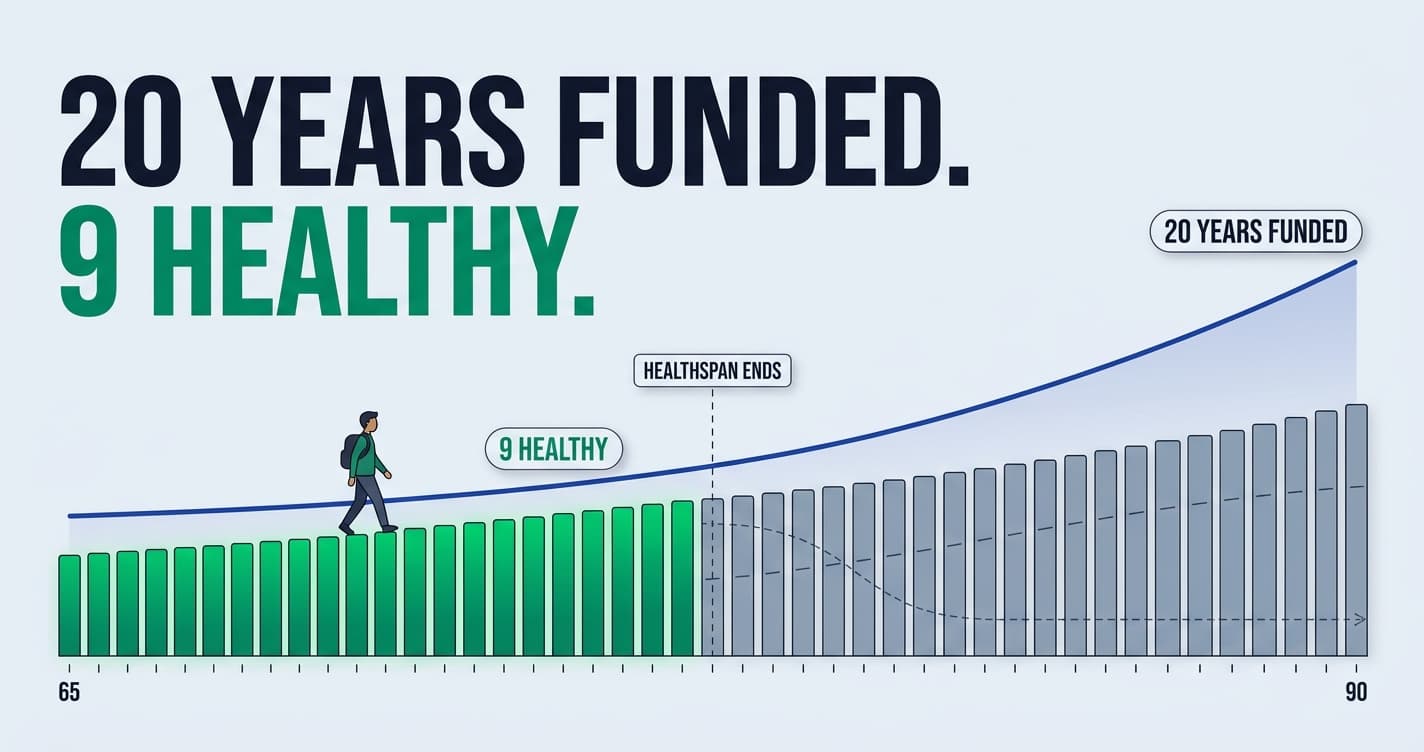
My projection argues about returns to a tenth of a percent and has no field for the body spending the money. At 65 in the EU you get 20 years, 9.4 of them healthy. Here's what healthspan vs lifespan does to a FIRE plan, and what a protected health line actually costs.
 Start Here
How Much Money Do I Need to Retire? The 25x Answer
You need about 25x your annual spending: $60,000 a year means $1.5M. The full table, where 25x comes from, and the age and pension adjustments.
 Start Here
What Is Barista FIRE? Meaning, Math, and Your Number
Barista FIRE: part-time work covers the gap while your portfolio compounds. The formula, a worked example, the healthcare catch, and your number.
 Start Here
Safe Withdrawal Rate 2026: Is the 4% Rule Still Right?
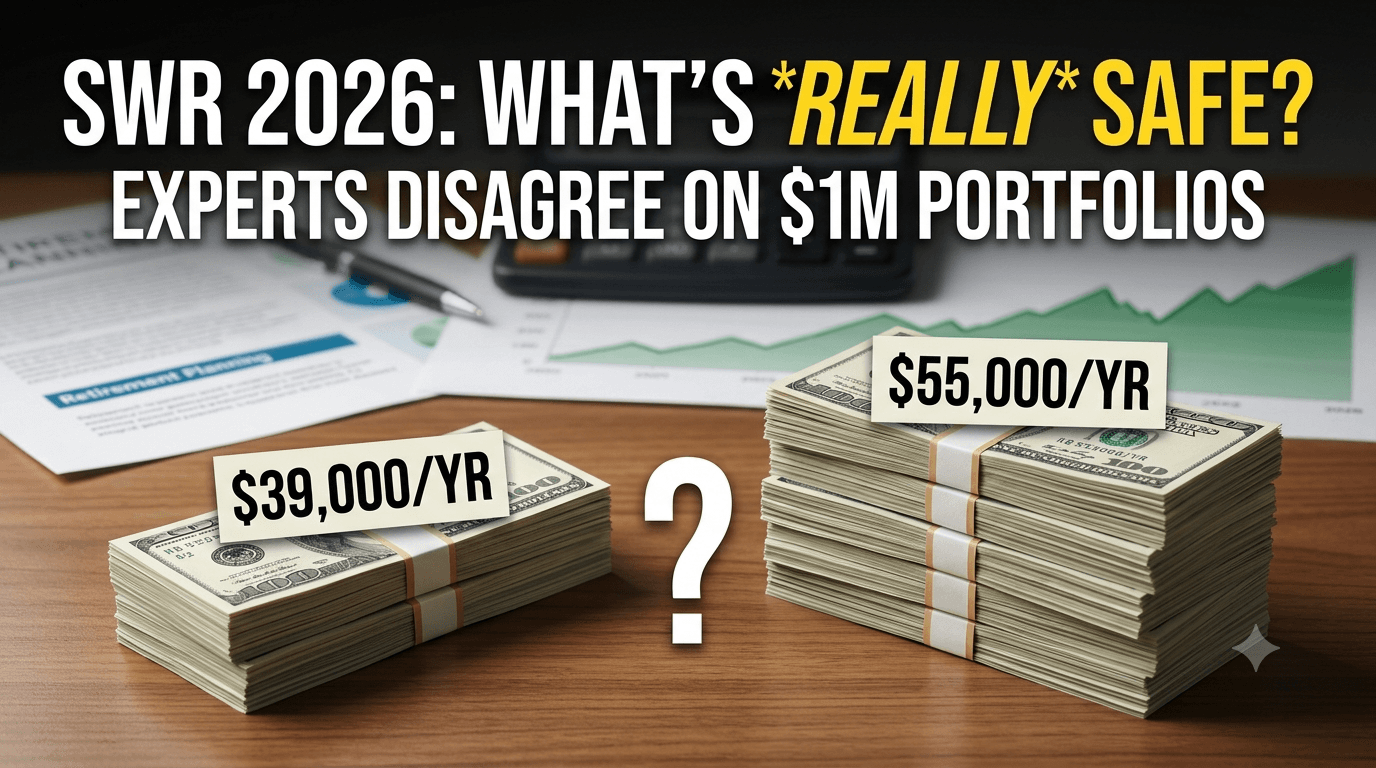
Morningstar says the safe withdrawal rate in 2026 is 3.9%; the 4% rule's inventor now says 4.7-5.5%. Here's why both are right, and how to find your number.