How to Start Investing: A Plain-English Beginner’s Guide

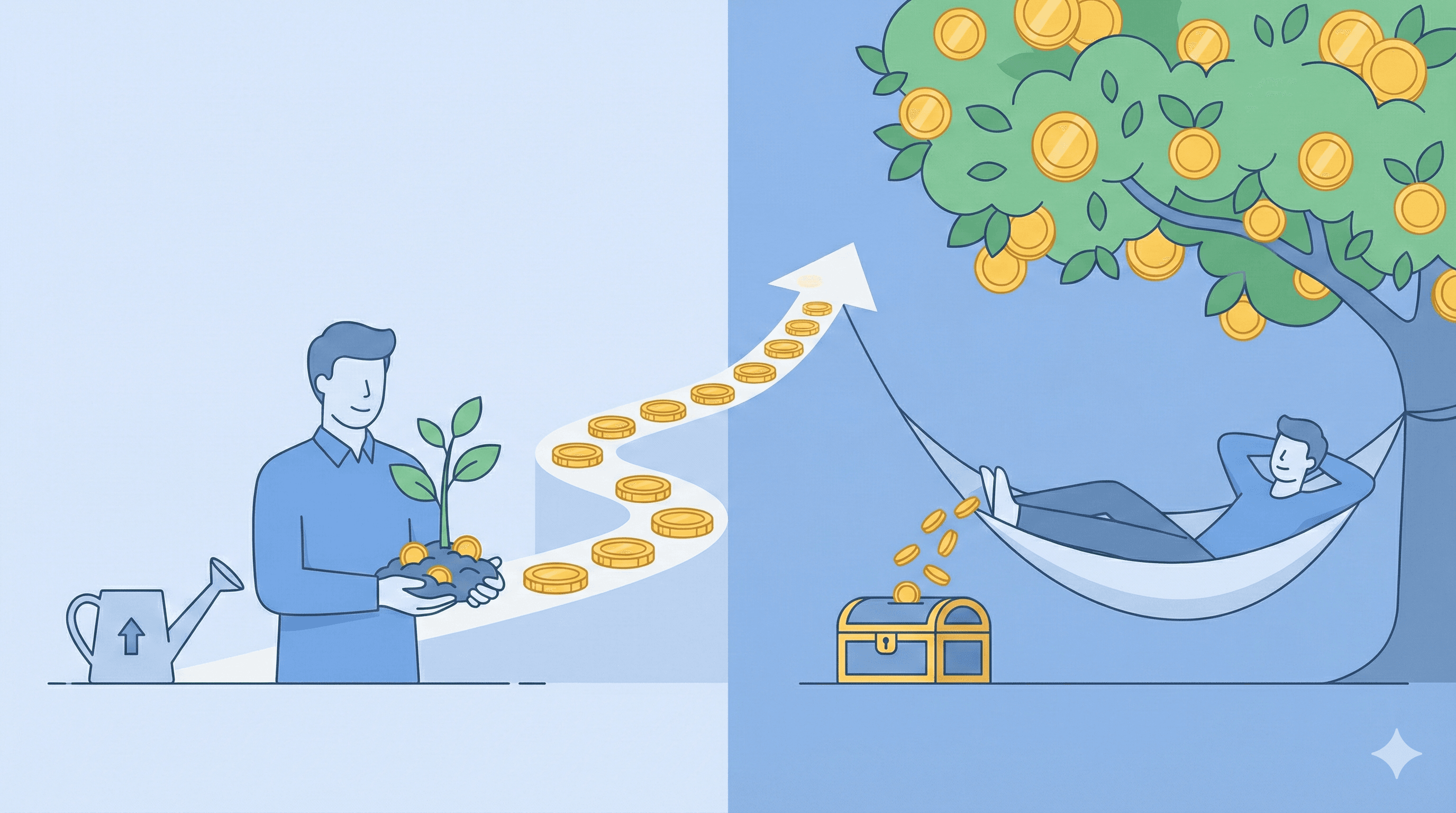
You've heard about investing. You know you should probably be doing it. But every time you try to learn, you hit a wall of jargon and complicated advice.
Sound familiar?
Let's fix that — in plain English.
This is the guide for how to start investing as a complete beginner — the basics in simple, human terms. No jargon, no unnecessary complexity. Just what you actually need to know to get started.
What Investing Is NOT
Let's start with the important stuff: investing is not getting rich quick. Don't expect overnight miracles, secret tricks, or "sure tips."
Investing is a long-term game. It requires patience, discipline, and the ability to suppress your ego today so you can enjoy freedom tomorrow. It's not for everyone — but for those who stick with it, it can be extremely rewarding.
So What IS Investing?
Simply put: Investing means buying a piece of something you believe will grow and prosper long-term.
The goal is for your money's value to grow over time — in other words, "making your money work for you."
In the past, this mainly meant individual companies. But today, you have access to a wide range of tools that let you invest:
- around the world (USA, Europe, Asia, the whole globe),
- in various sectors (technology, industry, agriculture, etc.),
- without having to pick anything complicated yourself.
Three Approaches to Investing
Personally, I divide investing into three basic categories:
-
"Better Savings Account" (Passive Investing) Global funds, ETFs (Exchange-Traded Funds — basically baskets of many stocks bundled together), companies with long histories
-
Active Investing - Buying individual company stocks
-
"Gambling" - Crypto and short-term speculation on company rises or falls
Everything has its place, but I personally invest most of my money passively — into the Better Savings Account.
Better Savings Account - Passive Investing
This is the foundation for most of us.
It's about long-term investing (5-10+ years) where you:
- invest regularly (e.g., every month),
- into a broadly diversified, low-risk portfolio,
- without constantly watching news and charts — you basically "forget about it."
Example: Every month from your paycheck, you send $1,000 into global funds. You don't worry about whether the market is rising or falling. You just invest and move on.
After 25 years, you look back and find you have roughly $1.4 million (based on historical market numbers). Without complicated decisions, stress, or chasing the "best investment."
If you put the same money in a regular savings account, you'd have about $300,000. The difference is... dramatic.
And what about risk? Look, it's always there. My personal philosophy is this: If something like a global index crashes, everything will go down anyway...
Compound Interest: The Real Magic
The reason investing works so well is called compound interest — the phenomenon where your earnings generate their own earnings, creating a snowball effect over time.
"Compound interest is the eighth wonder of the world. He who understands it, earns it. He who doesn't, pays it." — Albert Einstein
At the beginning, it looks slow. Almost like you just have money sitting in an account. But over time, growth accelerates — and after 20-30 years, the difference is enormous. If the mechanism itself still feels like hand-waving, how compound interest works takes the formula apart step by step.
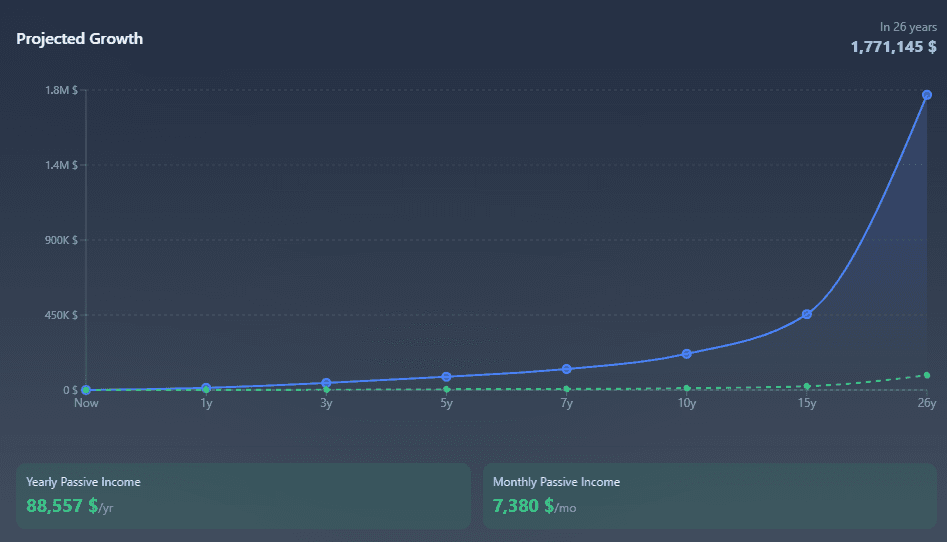
* The numbers used correspond to the historical average of global stock markets (~11% per year, $1.000/month). If you want to play with your own numbers, try a compound interest calculator.
Active Investing
This part of investing is:
- riskier,
- more time-consuming.
This includes buying individual company stocks. You can make a lot — but also lose a lot.
Personally, I recommend that before investing, you don't just read articles from random internet personalities, but also look at books written by the best to understand long-term concepts. As a good starting point, I can recommend: "The Intelligent Investor" by Benjamin Graham.
Gambling
I used a name that's emotionally charged at first glance. This type of investing has already cost many people, simply put, everything.
This includes Options — contracts that give you the right (but not the obligation) to buy or sell a stock at a predetermined price by a certain date. You can speculate on rises (call options) or falls (put options) with leverage — small investment, big potential profit, but also losing your entire stake.
The general rule is: Only invest money here that you can afford to lose.
I use a simple "Campfire Test":
If I lit this money on fire right now and roasted marshmallows over it, would it affect my life?
- If yes → don't gamble, I can't afford to lose it
- If no → go ahead and play, I accept the risk
Passive Income
I believe investing is the key to financial freedom and independence. When you start early and invest regularly, you can build passive income.
What Is Passive Income from Investing?
Passive income is cash flow that:
- comes regularly,
- doesn't require your daily work.
Typically this means:
- dividends,
- withdrawals from an investment portfolio.
Note: Renting property is not passive income — it always requires time, headaches, and management.
Traditional Retirement vs. Self-Investing
Traditional Retirement System
The average American contributes roughly $450/month to Social Security. Over 40 years, that's approximately $216,000.
In return, they receive about $1,500/month in retirement.
Better Savings Account
Now imagine investing the same $450/month.
- duration: 40 years
- average return: 11% per year
Result: approximately $3.15 million.
If you withdraw 4% annually from this amount (conservative rule):
- you get about $10,500/month in passive income.
And additionally:
- the capital remains,
- it can pass to your children.
Conclusion
Investing in the form of a Better Savings Account can fundamentally improve your future quality of life.
Every dollar you invest in your twenties and thirties has much greater value than one you earn in your fifties.
The math is simple. The hardest part is discipline, patience, and starting.
Stay Updated
Get notified about new articles and MFFT build-in-public updates.
Ready to Apply This?
Start tracking your finances today and put these tips into practice.
- Import bank statements in seconds
- AI-powered categorization
- Beautiful visualizations
- Set and track financial goals
Related posts
 Learn To Invest
Increase Monthly Investment Every Year. I Didn't, and That Was a Pay Cut I Gave Myself.
A month ago I called my unchanged monthly ETF transfer a sign of discipline. It is a pay cut. A contribution frozen since 2020 buys about 22% less, and a 10% savings rate drifts to under 8% with nobody deciding anything. Automate the buy. Never automate the amount.
 Learn To Invest
Investing App Gamification: Check What Your Broker Earns
The confetti isn't the problem, the revenue model is. A ten-minute test of what your broker earns while you do nothing, and why Europe and the US differ.
 Learn To Invest
When to Sell Index Funds: Four Tests Before You Touch Them
Not on a price or a date. Sell index funds only when one of four written-down tests is met, and keep a never-list for when panic poses as a plan.
 Learn To Invest
AI Investing Advice: Why ChatGPT Sells Conviction, Not Edge
Four in five young UK investors use AI for investing, and most know it can be wrong. One test for AI advice: does it remove decisions or manufacture them?
 Learn To Invest
Investing at All-Time Highs: What a CAPE of 41 Predicts
Valuation explains about 26% of the next decade's returns and 4% of the next year's. So high prices belong in your return assumption, not your monthly buy.