Is Rental Property Passive Income? Mine Is a Part-Time Job

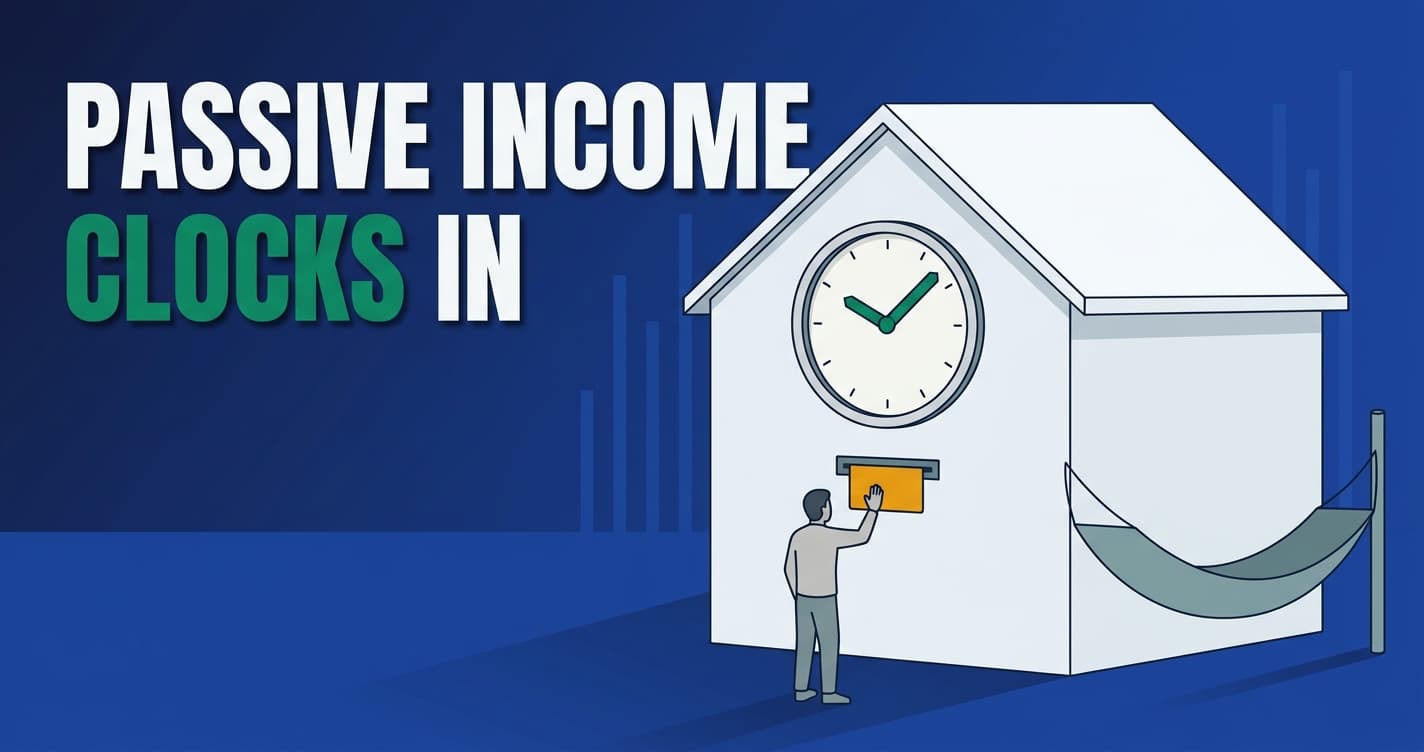
Nobody told me a second house comes with a calendar.
We own the place we live in, and we're slowly paying off a second one, roughly twelve years to go before it's properly ours. When we started I had the picture in my head that the word passive sells you. A building sits there quietly being worth money, and every so often it sends you some.
So, is rental property passive income? Not in any sense of "passive" that survives a Tuesday. It's a small business you agreed to run at an hourly rate you never worked out, and the whole problem is that almost nobody does the division.
Here's the confession a returning reader will want, because a lot of the internet writes about landlording from a chair it has never sat in. I own the building half of this job: insurance, maintenance, paperwork, money leaving on a schedule that never asked my opinion. The tenant half, the ten-o'clock phone call and the viewings and the turnover, I've watched land on people close to me. I'll flag every borrowed number as borrowed.
Both halves share one thing. A second building eats hours, in ones and twos, on Saturdays that were supposed to belong to something else, and not one of those hours has ever shown up in a yield calculation.
Is rental property passive income? Google answers a completely different question
Type that question into a search bar and the first page is almost entirely American tax explainers, all answering the same thing: how does the tax authority file the income?
Their answer, out of IRS Publication 925, is that a rental activity counts as passive even if you materially participate, unless you qualify as a real estate professional, which takes a 750-hour test.
Read that again slowly. The top of the internet is telling people that five hundred hours of work a year is officially passive.
That's where the word comes from. It's a box on a form in one country, and every property ad on earth borrowed it. Nobody searches that phrase because they want their filing category. They search it at ten at night after a phone call about a boiler. And if you're not American, that whole first page is answering a statute that has nothing to do with you.
2026 handed the job to a lot of people who never applied for it
Zillow put a US number on it in March. 2.3% of homes listed for rent on its platform had recently been listed for sale, one of the highest shares in nearly six years of records. The definition is tight, which is why I trust it: listed for sale at least two weeks, unsold, delisted, then back up as a rental within three months. Their senior economist Kara Ng named the mechanism cleanly: homes take longer to sell, so renting one out buys time instead of competing on price.
Europe is running the same story backwards, which I find more interesting than a parallel. In the UK one in six rental properties is being sold as landlords quit, and 15% of homes listed for sale had recently been rentals, up from about 10% a year earlier. Same household, same "I never really decided this," pushed the other direction by cost and compliance.
Then the finding that makes this everyone's problem rather than a landlord problem. In the English Private Landlord Survey, 45% of landlords own exactly one property and 83% own between one and four. The median landlord on either side of the Atlantic is not an investor with a portfolio. It's a household with one extra house.
None of this is about the home you live in, which is different arithmetic I argued out in rent vs buy. Your own house is a place to live that happens to have a price. A second one is a business with a roof.
How many hours does one rental take? Depends who's selling you the answer
I went looking for one honest number and came back with a mess. The mess turned out to be the story.
 Data: Lineage; Renters Place / NARPM; BiggerPockets via Rentec Direct; Westrom Group; Pegasus Insight, Landlord Trends (February 2026). Units are not identical — the 31 and 78 hour figures are per landlord across a whole portfolio (UK), the others are per property (US), and midpoints are shown where a source gave a range.
At the bottom of that chart, three hours a month, sits a brokerage that sells rental properties, quoting a figure that already assumes you hired a manager. At the top, thirty-one hours, sits Pegasus Insight, a UK research firm that sells neither houses nor management. In between are two property managers and a software company, all of whom do better when the number sounds heavy. Nobody publishing an hours estimate tells you which side of that trade they're on, and that disclosure is most of what I have to offer here.
Pegasus called their 31 hours "sweat equity," almost four working days a month. Their MD Mark Long put it better than I would: there's a perception that landlords sit back and let the cash roll in, and the data tells a different story.
The finding that rearranged my thinking was the next one. 57% of the properties in their survey already use a letting agent, and reported time commitments stayed broadly the same whether landlords outsourced or not. Compliance, maintenance oversight and financial admin don't transfer. Paying somebody buys down your worst hours, not your hours.
Two caveats, because I'd want them. The Pegasus 31 is per landlord across a whole portfolio, not per unit. And an average is not your house. Quiet months are real, which is why I'd rather you logged your own ninety days than anyone's average, mine included.
Put a wage on it
The whole method fits in one line.
Annual net cash flow divided by annual hours equals your rental's hourly wage.
Net cash flow means rent minus everything: interest, insurance, property tax, service charges, agent fees, repairs, and the two reserves people leave out because they ruin the story. Maintenance runs 1% to 4% of property value a year, more if the building is over twenty. Vacancy needs a real number, because turnover is the base case rather than bad luck. Leave principal repayment out; shifting money between your own pockets isn't income, however good it feels.
Then set that number beside two others: your own hourly rate at work, which most people have never calculated either, and the fund's, which is undefined because the denominator is zero. That's not a rhetorical trick. It's why "which one returns more?" was always the wrong question.
 Calculation from sourced inputs, not measured data: annual net cash flow ÷ annual hours. The hour columns are published estimates (Renters Place / NARPM, BiggerPockets via Rentec Direct, Pegasus Insight); the cash-flow rows are illustrative brackets, not market averages. Reference lines are measured US figures from Salary.com (1 June 2026) and ZipRecruiter (August 2026).
The market's own answer to what a landlord's hour is worth is comedy. Salary.com has "Landlord" at $51,066 a year, about $25 an hour, as of June 2026. ZipRecruiter, two months later, says $41.96. Two American job-market databases, 68% apart, on a role nobody ever wrote a description for.
Now the unpopular part. Almost every rental-versus-index-funds comparison online is built wrong. The best of them, published by a brokerage that sells rental property, has a row for "time commitment" and a row for "average annual return" and never divides one into the other. That's the entire argument, sitting there unperformed. I ran the same hours-first test across twelve common side hustles and it reordered the list.
The costs that arrive after the spreadsheet closes
TurboTenant surveyed around 2,000 American landlords for its 2026 report and 75% said their costs went up. There's a much-quoted 2024 pair on the aggregator sites, 82% reporting higher costs and 26% a rise above 20%, and I'd treat those as folklore with a direction, because I couldn't find a questionnaire or a sample size behind either.
Insurance is the line I can speak to personally, and it doesn't drift, it steps. US premiums rose about 12% in 2025 and are projected up another 4% in 2026, 46% above 2021. My own renewal jumped about 40% in one year, from around $940 to $1,310. I had a sinking fund for it, padded above last year's price, and still came up about $460 short and raided our random-stuff pot. The whole embarrassing episode is written up here. I build a budgeting tool for a living and the bill still got me, because I'd budgeted a percentage and the insurer sent a step.
Then turnover, which most people file under bad luck.
 Data: Zego Resident Experience Management Report and RealPage (United States); Simply Business and the Goodlord Rental Index (England). Currencies are not converted, and the two panels measure different things — the US figure is all-in (lost rent plus marketing, repairs and concessions), the English figure is lost rent alone.
Same event, two accounting conventions, and most landlords only ever count the smaller one. US multifamily retention sits at 57%, so roughly 43% of units turn over every year at about $3,872 each, taking nineteen months to earn back. Turnover isn't a shock. It's a recurring appointment.
The number that ends the argument for me comes from the PM Trends Report 2026, a Harris Poll survey of 500 American small landlords with one to ten units. It's industry-funded, so weigh it accordingly: 31% said they'd seriously consider selling after one unexpected repair costing under $15,000.
A cash flow that one water heater can end was never an income stream. It was a thin margin with a maintenance schedule attached.
The fund that asks for zero hours
This isn't "stocks beat property." I don't know that, and anyone who says they do is selling something. The point is narrower: one of these two things has a denominator and the other doesn't.
A world ETF has never phoned me. It has never needed a Saturday, a contractor, or a decision about somebody else's life. With a two-month-old in the house and a job I actually like, hours are the scarcest thing I own, and I already know which asset is asking for them.
Two pieces of research never appear on any page ranking for this question, and they're the best evidence there is. Chambers, Spaenjers and Steiner, Review of Financial Studies, 2021, hand-collected 82 years of property-level accounts from four Oxbridge college portfolios. Gross income yields hovered around 5%, long-term real income growth was close to zero, and annualised real total return net of costs came out at roughly 2.3% for residential. It sits far below the numbers you usually see because the colleges kept books, so the costs were in the ledger. Everything else you've read is gross yield plus price appreciation.
Then Giacoletti, same journal, same year, who measured the price volatility that belongs to your house and nobody else's: around 19% for homes sold within two years, about 8.6% annualised at a five-year hold. You can't diversify that away inside one property. A world fund holds thousands of buildings' worth of risk. Your rental holds one, on one street, with one tenant.
The uncomfortable version is opening your own net-worth breakdown and seeing what share sits on a single street. Easy check when the property and the portfolio share a screen in the tracker I build; nearly impossible while they live in two spreadsheets.
I'm not hunting a cleverer asset here. I had my clever-asset phase, rode one lucky pick into a crypto cycle that sat me down and explained I wasn't a genius, and came out of it buying fewer decisions on purpose.
Now the part where you argue with me
I've read the case for the other side properly, and some of it is stronger than my side would like.
Leverage. A bank will lend an ordinary salaried person 75% to 80% against a house at a fixed rate for decades. Nobody offers a family four-to-one on a world ETF with no margin call. Put 62,500 down on a 250,000 property and a 3% price move swings your equity by around 12%. That's a genuinely different machine. But leverage multiplies the return on your capital and does nothing to the denominator. A property can post a beautiful IRR and a miserable hourly wage at the same time, and almost everybody quoting the first has never calculated the second. Leverage was also available on your first house. This is about the second one.
Forced saving. True, because the direct debit doesn't ask permission. But that's an argument for automation, not for property: a standing order into a fund is forced saving with a zero-hour denominator.
Rent tracks inflation. Widely believed, and euro-area data doesn't support it for the last decade. Rents rose by noticeably less than consumer prices overall between 2015 and the end of 2025, and Eurostat found house prices outran rents in 25 EU countries over the same stretch. The costs tracked inflation just fine. That asymmetry is what eats the wage.
Illiquidity stops you panic-selling. The strong one, and it's measured. Morningstar's Mind the Gap 2026 found the average dollar in US funds earned 8.7% a year over the decade to the end of 2025 while the funds themselves returned 9.9%. That 1.2-point gap wiped out roughly 12% of total return, purely from when people chose to buy and sell, and Morningstar has found the same gap in every rolling ten-year period it has measured. You can't sell a house at 3am from your phone. That's a real advantage, not a consolation prize.
My answer is that I bought the same discipline cheaper: a written plan, an automatic transfer, and a decade of doing nothing interesting. Paying for good behaviour with a boiler and 58 to 372 hours a year is an expensive subscription to a habit you can install for free. Illiquidity also runs the other way on the day you need the money. A fund settles overnight; a US house sits on the market a median of 55 days, with 6% to 10% going to commissions and closing costs.
Some people are good at this and enjoy it. 62% of small American landlords use a professional manager, which means the other 38% looked at the work and kept it. If your hourly wage clears your own rate and you like the job, keep the house consciously. I won't pretend that's a failure.
So why do we still own ours? Because we bought it on purpose, years before I understood any of this, and because I'd rather hold it as a decision than as a default. That's the whole standard I'm arguing for. Not sell, not keep. Decided.
Is rental property passive income for your place? One weekend will tell you
Don't estimate this. Estimating is how everyone got here.
- Reconstruct twelve months, don't remember them. Two passes over the bank feed and the calendar: money that went out, and entries that only existed because of the property. Net cash flow is rent minus all of it, reserves included, principal repayment excluded.
- Log ninety days of hours, including the minutes that don't look like work. Twenty minutes on a compliance email. A Sunday waiting for someone who said between nine and one. Annualise, then sanity-check against the published anchors: 58 hours a year, about 120, or about 372.
- Divide, in your own currency. No conversion, no tax code, no country.
- Put it beside your own hourly rate, calculated the same brutal way: annual pay divided by hours actually worked.
- Then pick one of three exits, honestly. Keep it consciously. Or professionalise it and buy the hours back, budgeting 15% to 20% of gross rent rather than the 8% to 12% headline, then recomputing the wage. Or sell, with the exit costs priced before you romanticise them. And run this test before buying number two.
The hard part isn't the division, it's step one. Twelve months of property costs live scattered across a current account, a card and a loan statement, and reassembling them is tedious. That's the piece that took me longest, until the property and its loan sat next to everything else and the year's net cash flow became a line rather than an archaeology project. A spreadsheet does the same job; the tool just meant I actually did it.
What I'd tell someone about to become a landlord by accident
Price the job before you accept it, because what you're really spending isn't money.
Every hour a second property takes is an hour that didn't go into the thing that has compounded fastest for me by a distance. Not the ETF and not the house. The skills. The coach I paid for out of my own pocket has returned more than any asset I own, and managed it without one weekend spent waiting for a contractor. If hours are the scarce input, the question was never which asset returns more. It's which one is quietly billing you.
So, is rental property passive income? For the few who priced the job, like the work and clear their own hourly rate doing it, close enough. For everyone else it's a part-time job with a very slow payslip, and the sad part is that most of them never got the offer letter.
My daughter is two months old. In twelve years the second house is ours outright and she'll be twelve, and I'd like to be down to four days a week by then, with Wednesdays that belong to us and eventually a classroom where I get to teach math badly at first. None of that needs a bigger property. It needs the hours back.
I'll be running my own numbers this autumn. I have a fairly clear idea what they're going to say.
Stay Updated
Get notified about new articles and MFFT build-in-public updates.
Ready to Apply This?
Start tracking your finances today and put these tips into practice.
- Import bank statements in seconds
- AI-powered categorization
- Beautiful visualizations
- Set and track financial goals
Related posts
 My Journey
Coast FIRE Isn't a Permission Slip. For Us It's a Deadline — and We Won't Downshift When We Hit It.
Our coast FIRE number lands around 40 and I haven't crossed it yet. The internet treats that day as permission to quit and go part-time. I pulled 150 years of returns and ran the numbers: buying a four-day week costs one year of full FI, stopping costs sixteen.
 My Journey
We Bought Almost Everything for Our Daughter Second-Hand. The Money Was the Smallest Part.
The stroller, the cot, the chairs and most of her clothes came from someone else. The money we saved was small enough to be embarrassing. We bought second-hand baby gear anyway, because new is what the baby industry charges for reassurance.
 My Journey
When the Market Drops, I Do Nothing. Not Because I'm Disciplined — Because I Deleted the Decision.
The market fell in September and I did nothing. Not out of discipline — there was no decision left to make. Why I think buying the dip is panic selling with better manners, and the one exception I allow.
 My Journey
When the Market Drops, I Do Nothing. Not Because I'm Disciplined, But Because I Deleted the Decision.
I found out about the June sell-off on the Monday, from a colleague at lunch who wanted to know if I was alright. My answer to what to do when the market drops is nothing, and it isn't discipline. I once put a third of my net worth into Cardano, and I still hold the wreckage as a reminder.
 My Journey
Health Is the One Asset in Our FIRE Plan I Can't Buy Back at 40 — and This Year I've Been Quietly Spending It
Health and skills compound like the ETF does, and they're the only assets in our FIRE plan I can't buy back at 40 with a bigger number. This year, the first baby year, is the first time I've run a real deficit on one of them. No morning routine at the end.